Ever since I started writing my adventures, people are always asking me things like: How are you related to Paul? Is Neil your dad? Are you the same Becks as the Distillery Henry A. Beck from the “olden days?” Was Pam your sister? (I especially like that one.) You can’t be Cindy’s brother, you have red hair. And the best one, “Are you new to the valley?”
In order to make a point and perhaps give my stories a little credibility, I want to give a brief history of my family. I have to admit that I have not spent enough time researching the topic to include everyone from the day we arrived in the valley; but, I will do my best and ask for forgiveness from my family for any errors or omissions. So here goes…
I have always said I am the 5th generation of Becks to live in the valley, and this will certainly prove that point. So, how come I cannot get Pioneer plates? Well, I guess that question is best asked in another forum.
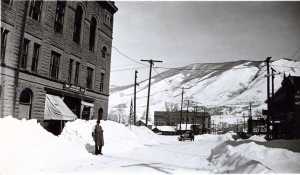 John A. Beck came to Aspen sometime around 1882, give or take a year. He was from New Diggins, Illinois. The big city back then was Galena (kind of like Raleigh if you lived in Mayberry). John decided to take John B.L. Soule’s advice and “Go West young man…” I know, by now you are thinking I have my history all wrong, that was Horace Greeley who said that. Well, check your history books.
John and his young wife, Elizabeth Rockefeller Beck came to town and set up shop as local grocers. Not long after that John A.’s dad and Uncle “Willie” followed him to town. Stick with me now, we are already up to two generations in the valley; three more to go until you get to me and my generation.
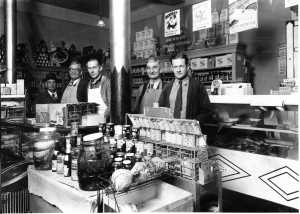 “John A” not only set out to establish a life in the Aspen Valley but his desire to have a family was also in his plans. He and Elizabeth had Alton C. Beck as their first born, and not long after that Henry A. Beck was brought into the world. Generation three was now in the valley. By the end of Alton and Henry’s teen years “John A. Beck Fancy & Staple Groceries” was to be transferred to the boys and soon became “Beck Brother’s Groceries.” The store was located in the Wheeler Opera House building for most of the years it was in business.
Alton and Alma Beck had three children; Glenn, Paul and Sandra. At the same time Henry and Pansy had two kids; Shirley and Neil. OK, if you lost count that was the origin of the fourth generation. And if you were paying really close attention, that was the second generation to be born in the valley.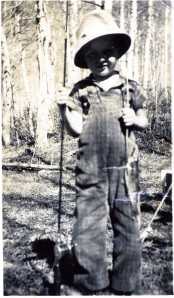
Both Paul and Neil spent their childhoods growing up around the family business in the grocery. They even took their turns delivering groceries twice a day by horse team around town. For some of Aspen’s residents this was the only company they got each day. They also worked as stock boys, baggers and even butchers. During the quiet years of the depression most of the groceries were purchased on credit and paid for after the economy turned around.
Glenn Beck moved away to pursue his career eventually having three kids of his own. Paul had two kids and I am not sure if Sandra ever had any children. Paul’s kids remain in the valley to this day as do Glenn’s two daughters. At the same time my dad married Pamela Worden and they had four kids of their own. I am the youngest of the four preceded by Cindy, David and Debbie. Now for those of you keeping track, that is five generations of Becks of which three generations were born in the valley.
My sisters still live in the valley although not within the city limits of Aspen. I have hopes of returning to the valley to raise my kids within the next few years. My sister Debbie gave birth to her three kids in Aspen; so, we are really up to six generations, four born in the valley.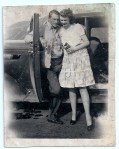
For a little more clarity:
- Shirley Beck married Nelson “Jr.” Smith and they had 3 kids.
- Debbie Beck married Michael Kendrick and they have 3 kids.
And now to answer the questions:
- How are you related to Paul? He is my first cousin once removed.
- Is Neil your Dad? Yes
- Are you the same Becks as the Distillery Henry A. Beck from the olden days? Nope, that was Hilder Anderson’s father.
- Was Pam your sister? No, my mother
- You can’t be Cindy’s brother, you have red hair. OK
- Are you new to the valley? If you compare my family to the Ute Indians, yes.
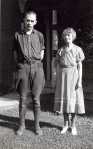 r family back east but I am not sure of the connection. Elizabeth was married to John A. Beck and together they lived in the house up to and beyond John’s passing. The house was originally built by them in the early 1880’s. As she was getting on in years she asked my father to live next door so he could help care for her. At the time my parents were living in a trailer house up by the original Lift One. The move would be a simple process and set the stage for more moves of its kind in the years to come.
 With the trailer located on the lot next door my father built a nice entryway, a boardwalk from the street and it was “Home Sweet Home.” This move took place in 1956 not long after my oldest sister, Cindy, was born and less than a year from the birth of my older brother. The family dog was a German Sheppard by the name of Archie. He, too, was the start of a very long run of Sheppards we would have as pets over the years.
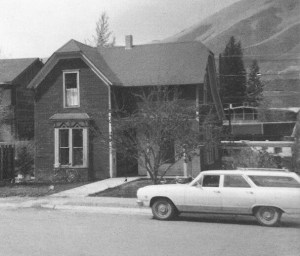 had grown to three kids with another one, me, on the way. He added an addition onto the back that provided a full bathroom and mudroom. With three bedrooms upstairs there was plenty of room for his growing family.
 Dooger's Blog